



The American culture of misunderstanding in Iran and the Middle East

Washington, DC (Special to Informed Comment; Article) – It is increasingly clear that effective international communication is impossible without a basic knowledge of the world’s cultures. American officials say as much when they admit that failures in Afghanistan and Iraq were largely due to ignorance of the culture and pushing too many programs that conflicted with local values. In Afghanistan, for example, the United States pressured tribal leaders to adopt a centralized form of government, when decentralization was a more familiar pattern from the past. In the end, the Afghan government only controlled Kabul. The United States also insisted that USAID-funded projects be made up of 25 percent Afghan women. But in practice, few Afghan women had the necessary skills or the willingness to join their projects. Even when they did, social norms required that they be escorted and transported everywhere—expensive provisions that forced projects to be canceled.
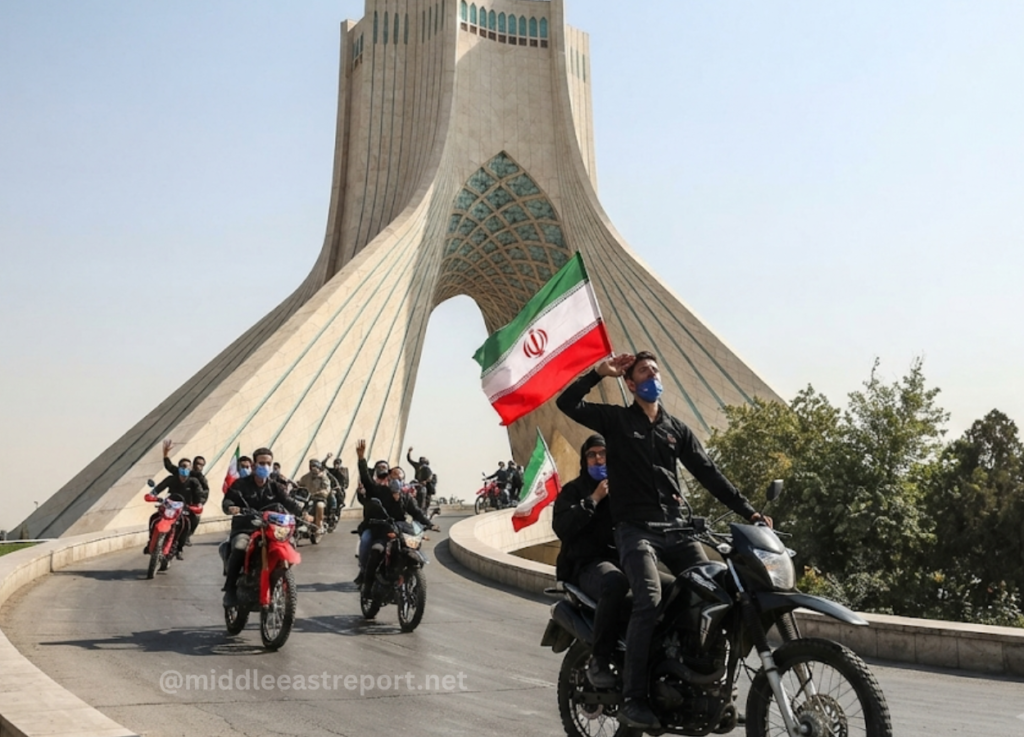
In a book Iran and the United States (2017) that shows how little has changed, author Seyed Mousavian attributes the problems of negotiators on both sides to their misinterpretation of each other’s thinking. The Americans believe the Iranians will surrender with coercive diplomacy, while the Iranians distrust American motives and believe their intention is to dominate the country. In Mousavian’s view, the United States would be more effective if it used the language of respect and equality. But the Americans, on the other hand, talk down to the Iranians, seeming not to realize how much this irritates Iranians who are proud of their glorious civilization and their past.
Andrea B. Rugh, In Search of Worldviews: What Anthropology Can Tell Us About the Middle East. Berghahn Books, 2026. Click here to purchase.
The United States, he says, focuses its negotiating strategies almost entirely on economic and political issues, while completely ignoring the importance of psychological and cultural issues that are important to Iranians, such as their “culture of resistance to foreign domination and humiliation.” Another major misunderstanding is the West’s failure to differentiate Shia Islam from Sunni Islam, assuming that both are the same, when in reality Shia Islam plays a different role in society and has a much greater ability to mobilize the masses.
Mousavian’s time as a student in the United States prepared him to see more clearly where American negotiators were coming from. He says they believe their culture is universal, acceptable anywhere, with a cold war mentality that finds enemies in anyone who disagrees. For them, Islam has simply taken the place of the Soviet Union as the new enemy. And then President George W. Bush accentuated the polarity when he included Iran as part of the Axis of Evil in a conflict in which the United States felt called to heroically confront evil. Mousavian concludes that threatening and intimidating language is a major obstacle in negotiations between the United States and Iran. Does this sound familiar?
What intensifies this paranoia of Islam as an enemy is that our wars of late have predominantly involved Muslim-majority countries. In the effort to make our wars appear virtuous, we have created an antagonistic villain in the Arabs and an image of a white knight on horseback coming to the rescue: saving women from their male oppressors (as in Afghanistan), or citizens from tyrannical governments (as in Iran), and offering the gift of our own “superior” forms of government.
If one of the main problems of conflicts is cultural, where will those of us who want to know find reliable cultural knowledge? In the past, anthropologists such as Margaret Mead and Ruth Benedict wrote about cultures in a way that the public could easily understand. Nowadays it is difficult to find studies of this type. Anthropologists have virtually retreated into academia, where they do not address the pressing problems of the day or use language that the public can understand.
Unfortunately, the Greater Middle East is an area where this cultural knowledge is not only lacking but has been distorted by the Western perceptions described above. In my opinion, anthropology, with its tools of participant observation and holism, remains the best data-driven way to collect this type of cultural information. By culture I mean those shared beliefs, values and views that help societies make sense of their world and the behavior of people in it. Some of the questions that anthropologists could usefully answer include: What are the conventions for conducting interpersonal relationships? Why is it so difficult to establish democracy in societies that have centuries of experience in participatory governance? What are the local patterns for resolving disputes or negotiating differences? Why is Islam expanding when other major religions are declining? Is it really plausible that white men like Pete Hegseth would set out to save Muslim women? How do families create such cohesive and loyal groups? How do communal societies work in the Middle East?
Anthropology had a sinister history as a tool of colonial rule, and no one wants those mistakes to be repeated. However, discipline remains vital for the American public to understand the roots of American failures in the region. If we understood other cultures better, couldn’t we avoid getting involved in these conflicts in the first place?


