



The best of a great week in the Middle East

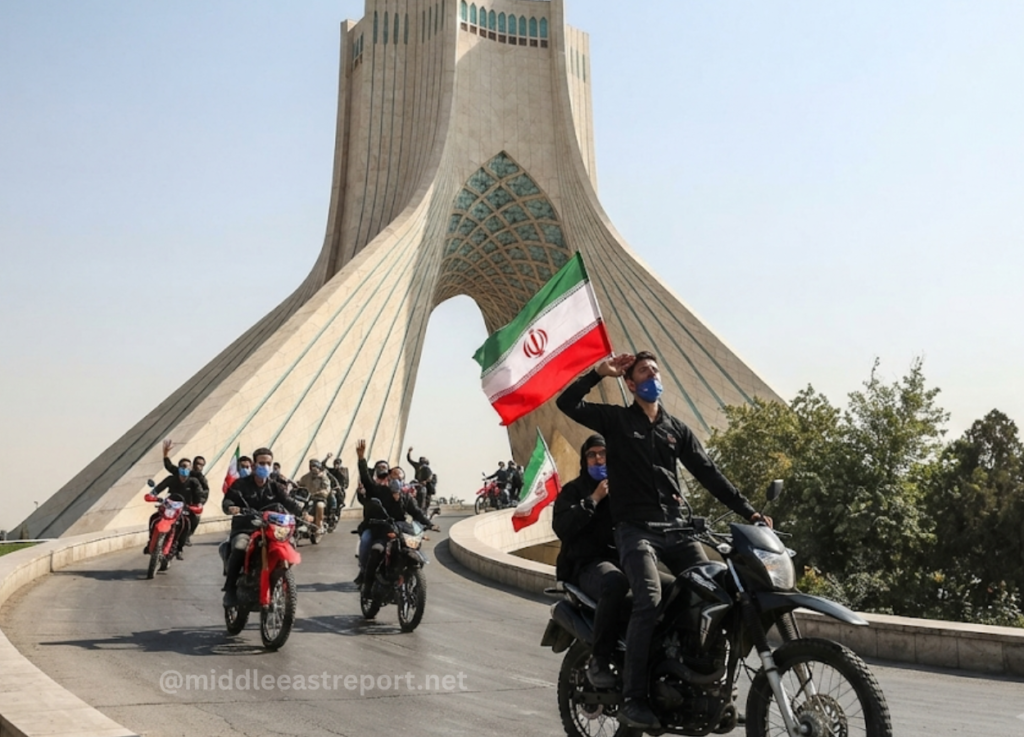
Hello and happy Saturday. The situation in the Middle East added a few layers of complexity this week. As the United States and Iran traded attacks, the Yemen-based Houthis said they would impose a naval blockade of Saudi ports. Meanwhile, the Trump administration announced Wednesday that it had signed an agreement with Saudi Arabia to help it build a civilian nuclear program.
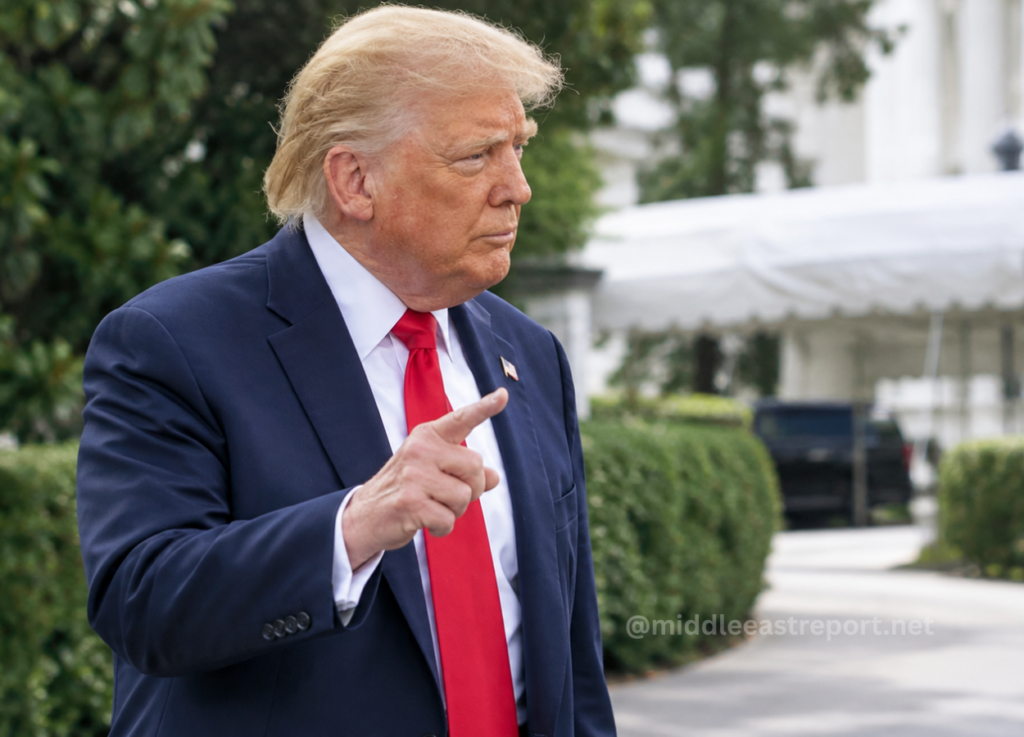
There’s a lot to unpack, especially considering that after the nuclear deal was signed, President Donald Trump said Thursday that it was dependent on Saudi Arabia normalizing its relations with Israel. Saudi Arabia has long insisted that it would not do without a path to a Palestinian state.
That puts the deal in doubt, which, given the reviews of the deal provided by Kevin D. Williamson and Nick Catoggio, might not be the worst thing. Pointing to the New York Times report that the Saudis insisted on terms limiting international inspectors and that the deal could eventually allow the Saudis to enrich uranium, Nick ran through the various reasons Trump might have sought such a deal: The Saudis have been benefactors of several Trump family companies, he views them as friends, or perhaps oil was involved. He concludes:
Wherever you land in all of this, it goes without saying that a Trump-led US government cannot be counted on to prevent the Saudis from converting their nuclear energy program into a nuclear weapons program, no matter what kind of formal “black box” guarantees may be built into the relationship. Relying on the post-liberal United States to oversee Riyadh is like trusting one mafia family to police another with whom it does business.
Kevin, who agrees with Nick that the Saudis ultimately seek a nuclear weapon, reminded readers that the Saudis had terribly close ties to the terrorists who carried out the terrorist attacks of September 11, 2001 (15 of the hijackers were nationals, Saudi charities and elites financially supported Al Qaeda, etc.) and noted that the Trump administration has tried to stymie litigation brought by victims’ families. of September 11 against the Saudi government. He writes: “The administration’s credibility here… is not exactly bomb-proof. And we know that Trump can be bought, or at least rented, by any small-time Arab potentate with enough capital to buy a plane.”
As of Friday, the United States had carried out strikes against targets across Iran for 13 straight nights, with Iran targeting American military facilities and civilian infrastructure in the Gulf States. Trump has threatened to attack Iranian bridges and power plants in response.
Reuel Marc Gerecht suspects that Trump really wants a non-military solution to the problem, but says that “his ‘deal-making’ style is not helping. The president’s spins, the continued disconnects between word and deed, make him seem less and less serious.”
And it suggests that the president is running out of time:
We are probably in Trump’s last chance to show that he still deserves the initial fear that the Islamic Republic had of him. If it does not begin the Battle of Hormuz now or at least amplifies the economic war through an indefinite oil-proof blockade, which will certainly ensure that Iran continues to fire on the energy infrastructure of the Arab Gulf states, then it is not likely to prepare for a more dangerous military campaign after the November elections, as some expect.
new Promise((r) => { const tick = () => test() ? r() : setTimeout(tick, 30); tick(); }); wait waitFor(() => $store.user.loaded); // An anonymous visitor came here from a signed email and click subscribe; // short circuit to terminal status email_subscribed. if ($store.user.justSubscribed?.isGuest && !$store.user.valid) { state=”email_subscribed”; hydrated = true; return; } if ($store.user.valid) { $store.iterable.getIterableUser(); await waitFor(() => $store.iterable.gotIterableUser); } try { const params = new URLSearchParams({ post_id: String(postId) }); if ($store.user.valid) { params.set(‘hydrated’, ‘1’); ($store.iterable.subscribedMessageTypeIds || ()).forEach((id) => params.append(‘subs()’, String(id))); ($store.iterable.ignoredMessageTypeIds || ()).forEach((id) => params.append(‘ignored()’, String(id))); ($store.iterable.digestAuthorIds || ()).forEach((id) => params.append(‘authors()’, String(id))); (…($store.iterable.digestTopicIds || ()), …($store.iterable.digestProductIds || ())) .forEach((id) => params.append(‘topics()’, String(id))); } const res = await fetch(restUrl + ‘?’ + params.toString(), { credentials: ‘same origin’ }); const data = await res.json(); status = data.state || ‘hide’; if (data.brand_slug) { brand_slug = data.brand_slug; brand_term_id = data.brand_term_id; brand_name = data.brand_name || brand_name; brand_description = data.brand_description || ”; primary_color = data.primary_color || primary_color; tertiary_color = data.tertiary_color || tertiary_color; author_avatar_url = data.author_avatar_url || ”; message_type_id = data.message_type_id || 0; } // Iterable’s read after write is finally consistent: if // the new fetch missed the newly subscribed MT, push it now // and rewrite the preferences cache so that the menu/header/future // page load reflects the correct state. if ( $store.user.valid && message_type_id && $store.user.justSubscribed && !$store.iterable.subscribedMessageTypeIds.includes(message_type_id) ) { $store.iterable.subscribedMessageTypeIds.push(message_type_id); $store.iterable.unsubscribedMessageTypeIds = $store.iterable.unsubscribedMessageTypeIds.filter((id) => id !== message_type_id); $store.iterable.updateIterablePrefsCache?.(); } } catch (e) { console.error(‘(cross promotion) recommended fetch failed:’, e); status=”hide”; } hydrated = true; if (state === ‘anon’ &&!$store.signUp.email) { const urlParams = new URLSearchParams(window.location.search); if (urlParams.get(’email’)) $store.signUp.email = urlParams.get(’email’); } })(); “x-effect=” // IIFE: Alpine wraps x-effect as `return (…)`, so there are only `if` errors. (() => { if (pendingSubscribe && !$store.signUp.isSubmitting && $store.user.valid) { pendingSubscribe = false; state=”subscribe”; } })(); “>
you may also like
Loading { status=”subscribe”; }, }); “>I’m not interested
Login
But Mike Coté, a writer and historian who hosts the Rational Policy podcast, argues there could be another option: stop shooting. He notes that the endless cycle of “negotiation, ceasefire, fighting and escalation” has done nothing to moderate the conflict and that both diplomacy and combat have their own risks. Your solution? “Embrace the ambiguity and take a step back.” Basically, end the strikes, maintain the blockade and increase sanctions. He writes:
This approach avoids many of the pitfalls that could arise (and many have already arisen) in the negotiation and law enforcement process, as well as a possible return to all-out war. Instead of trying to reach an understanding with a counterpart that is not interested in implementing or following any agreement, the United States should accumulate its tangible military victories, continue to apply maximum economic pressure, and maintain its freedom of action to kinetically attack once again if the opportunity arises.
Thanks for reading and have a good weekend. One note: There will be no Dispatch Weekly next Saturday as the Ohio bureau moves to South Carolina for a bit of a break. If you have any recommendations for the Charleston area, I’d love to hear them.

Perhaps the most surprising thing about Doug Wilson’s ideas is how much they recycle. When asked about the Christian nationalist policies she would focus on today, Wilson ran through a narrow set of culture wars issues: abortion, LGBTQ rights and feminism. Wilson runs his ministry following the tried-and-true model of the megachurch pastor or televangelist, presiding over a conglomerate of churches, schools and media outlets that also employ his family. …And although Wilson claims the moniker “Reformed” (his university is “New St. Andrews,” echoing the University of St. Andrews), his lack of formal theological training (he has a master’s degree in philosophy from the University of Idaho but no theological seminary degrees) and his penchant for innovation are constitutionally at odds with that tradition. In many ways, Wilson’s approach reflects more his upbringing as a child of the post-World War II religious revival than the traditionalism he advocates.

It’s just before noon on a Saturday, and the asphalt of RFK Stadium’s “festival grounds” (which is just a nicer way of saying “parking lot”) is already reflecting 90-plus-degree heat toward the crowd. Free Throw is one of my favorite new emo bands, and I’m not one to turn down a good time. But I just got off a midnight trip from Jersey to DC and I’m exhausted. The early hours (at least between, say, 4 and 11:59) are not for moshing. And yet, there is a pit to jump into. The first pit of the Vans Warped Tour 2026. What started as a ramshackle tour, 31 years later, has become a highly choreographed blockbuster festival with stops in five major North American cities. The Vans Warped Tour is often compared to an emo summer camp for artists and attendees alike. Today the tour is more polished, more corporate, more predictable. But the formula remains the same and it works. And while the “summer camp” comparison may be cliché, there is a reason it remains stagnant.

There’s an old joke that libertarianism is “a dark conspiracy to leave you alone,” and while conservatism and liberalism (I’m referring to what we call “classical liberalism,” although I don’t really like that phrase and don’t want to repeat it every time) are distinct from libertarianism, they have a certain libertarian character and share a certain libertarian handicap: the practical pursuit of political power is always in tension with philosophies based on restricting political power. Populism is exciting and enjoys a certain inherent political advantage because it is based on an underlying premise of action rather than an underlying premise of moderation: a populist demagogue, right or left, can promise a crowd almost anything; there is no limiting principle. Ezra Klein, speaking at the conference, praises the “unlimited” vision of socialist New York Mayor Zohran Mamdani. Liberalism is not an unlimited vision of the scope of state action. The hard part about selling American liberalism or conservatism (which seeks to preserve the liberal principles of the American founding) is not how we talk about the philosophy: the problem is with the philosophy itself. Restraint (except for a few twists) is not sexy. There is nothing exciting about recognizing the need to make trade-offs, the role of prudence applied ad hoc to individual cases, or that the best case we offer is a series of good-enough second-rate compromises and accommodations.


